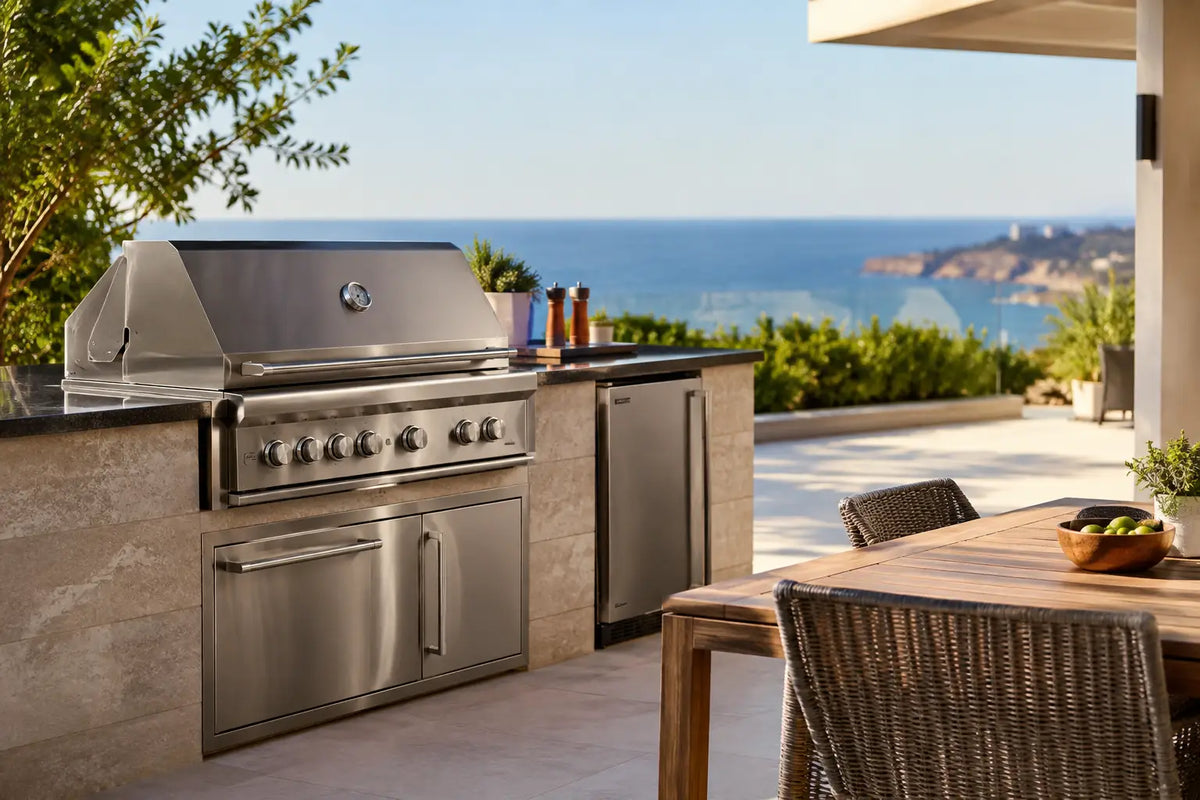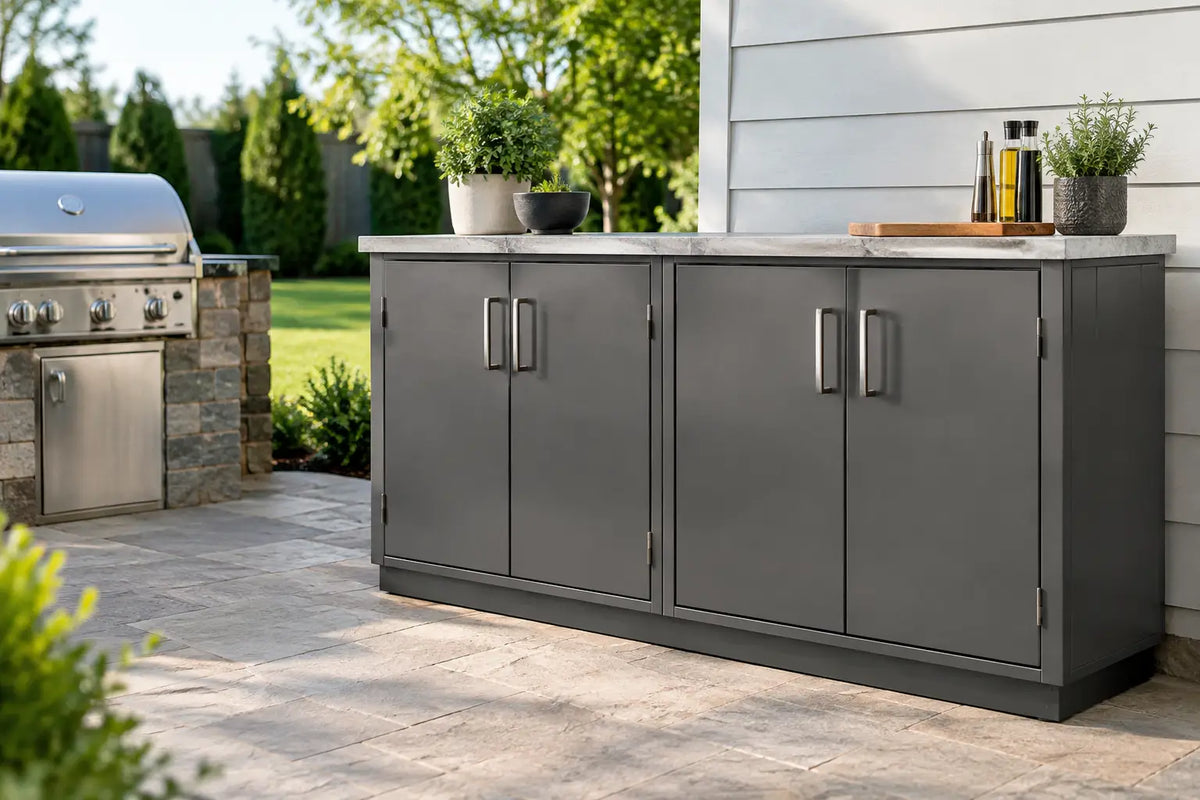
A beautiful outdoor kitchen can lose its appeal quickly when cabinet doors stain, hinges seize, or orange corrosion appears around seams. For homeowners investing in a terrace, poolside entertaining space, or luxury backyard, the question is not simply, “are outdoor cabinets rustproof?” It is whether the entire cabinet system is engineered to remain refined through rain, heat, frost, humidity, and years of use.
The honest answer is that no outdoor cabinet should be judged by a single “rustproof” claim. Aluminum does not rust in the conventional sense, while stainless steel can still corrode under the wrong conditions. The material, protective finish, hardware, drainage, ventilation, and installation location all determine how well a kitchen performs outdoors.
Are Outdoor Cabinets Rustproof? The Straight Answer
Outdoor cabinets can be highly resistant to rust and corrosion, but “rustproof” is often used too loosely. Rust is technically the oxidation of iron and steel. Aluminum cabinets do not develop red rust because they contain no iron, yet they can oxidize, pit, or discolor if their finish is damaged or if they are exposed to aggressive coastal air.
Stainless steel contains iron, which means it can show corrosion when moisture, salt, chlorine, or contamination remain on its surface. Higher-quality grades and thoughtful construction substantially reduce that risk, but they do not eliminate the need for sensible care.
For a premium outdoor kitchen, the better standard is corrosion-resistant by design. That means the cabinet body, fasteners, hinges, handles, leveling feet, cut edges, and internal components have all been selected for real exterior conditions, not merely for a showroom setting.
The Materials That Perform Best Outdoors
Material selection shapes both the visual character of an outdoor kitchen and its long-term maintenance demands. Each leading option has a place, provided it is specified for the climate and installation.
Powder-Coated Aluminum
Powder-coated aluminum is one of the strongest choices for contemporary modular outdoor kitchens. It is light, stable, and naturally resistant to red rust. A professionally applied powder coat adds a durable outer barrier, opening the door to architectural colors and a clean, tailored appearance that suits modern homes and hospitality spaces.
The finish matters as much as the aluminum beneath it. A poor coating can chalk, fade, or chip, especially under intense sun or frequent impacts. Once deep scratches expose bare metal, moisture and contaminants can reach the surface. Quality systems use outdoor-rated coatings, precise preparation, and careful finishing around edges, corners, and cutouts.
Aluminum is especially compelling when a project calls for a polished, custom-color look without the visual heaviness of all-stainless cabinetry. It is also practical for rooftop terraces and balconies where weight and installation speed deserve serious consideration.
Stainless Steel
Stainless steel remains a classic outdoor-kitchen material because it is strong, hygienic, heat tolerant, and unmistakably professional. However, not all stainless steel is equal. Lower grades may be suitable in a sheltered inland setting, while 304 stainless steel offers a more dependable baseline for many residential installations.
For coastal properties, waterfront homes, or areas exposed to de-icing salts, 316 stainless steel is usually the more prudent choice. Its added molybdenum improves resistance to chloride-driven corrosion. That distinction can be the difference between a kitchen that retains its finish and one that develops tea staining around hardware and exposed edges.
Even premium stainless requires periodic washing. Salt does not need to be visible to cause trouble. Airborne salt, pool chemicals, and residue from cooking can settle on surfaces, hold moisture, and undermine the protective oxide layer that makes stainless steel perform so well.
Marine-Grade Details Matter More Than Labels
A cabinet may have a corrosion-resistant frame yet still fail at its smallest components. Standard steel screws, low-grade drawer runners, or unprotected hinges can introduce rust into an otherwise premium installation. This is why specification sheets deserve more than a quick glance.
Look for corrosion-resistant hardware, sealed or protected fasteners, and compatible metals throughout the cabinet. When dissimilar metals are positioned carelessly, moisture can create galvanic corrosion. In simple terms, one metal can accelerate the deterioration of another. Good engineering prevents these hidden weaknesses before the kitchen reaches your property.
The Design Details That Keep Water Out
Material alone cannot compensate for weak cabinet design. Outdoor cabinetry needs to manage water deliberately, rather than hoping it will evaporate before damage occurs.
Well-engineered systems use sloped surfaces, protected seams, controlled drainage paths, and raised bases that prevent standing water beneath the cabinets. Doors and drawers should close cleanly, with gaps designed to shed water rather than trap it. Countertop joints, appliance cutouts, and rear panels also require attention, particularly when a kitchen is placed against a wall where airflow is limited.
Ventilation is equally essential around grills, refrigerators, and gas components. It supports safe appliance operation, reduces heat buildup, and helps moisture escape from enclosed spaces. A luxury outdoor kitchen should feel beautifully resolved from the front, but its performance is often decided behind the doors and beneath the countertop.
Climate Changes What “Weather Resistant” Means
A cabinet that performs beautifully in a dry, sheltered yard may need a more demanding specification near the ocean or beside a heavily chlorinated pool. Buyers should assess their site before selecting finishes and materials.
Coastal locations are the most demanding. Salt air can travel far inland, and direct oceanfront exposure can require frequent rinsing even when using marine-grade materials. In humid climates, prolonged moisture and limited airflow increase the likelihood of corrosion in crevices and under covers. In regions with freezing temperatures, water trapped in joints can expand and place stress on finishes, seals, and countertop interfaces.
Intense sunlight brings another consideration: UV performance. Dark finishes may become hotter to the touch, while poorly formulated coatings can fade or lose their original depth. A premium manufacturer should be able to explain how its cabinet finish is intended to perform in exterior light and weather conditions.
How to Assess Outdoor Cabinet Quality Before You Buy
The most impressive renderings do not reveal what happens after five seasons outdoors. Ask specific questions before committing to an outdoor kitchen system. What is the cabinet body made from? Is the finish rated for exterior UV exposure? Which stainless grade is used for hardware and appliance surrounds? How does the base drain? Are the modules designed to sit directly on a patio, or are adjustable feet included to create separation from wet ground?
Also ask where the cabinets are manufactured and assembled. Pre-assembled modular systems can offer a meaningful quality advantage because alignment, door gaps, hardware fitting, and finish inspection are completed in a controlled facility rather than left to a variable on-site build. This is central to the appeal of a plug-and-play luxury kitchen: less installation friction, fewer improvised details, and a more predictable result.
For a project with an integrated grill from Napoleon, Broil King, or Big Green Egg, confirm that the surrounding module provides the proper ventilation, clearances, and access for servicing. Heat management and moisture management must work together. A cabinet that looks exceptional on delivery should remain practical when it is time to clean, maintain, or replace an appliance.
Care That Protects a Premium Finish
Even the best outdoor cabinets benefit from light, regular attention. Wash exterior surfaces with mild soap, clean water, and a soft cloth. Rinse away cooking residue, bird droppings, fertilizer, salt, and pool splash promptly rather than allowing them to sit on the finish.
Avoid abrasive pads, harsh chlorine cleaners, and products containing acids unless the manufacturer specifically approves them. These can damage coatings or compromise stainless steel surfaces. For stainless components, wiping in the direction of the grain helps preserve an even appearance.
A cover can be useful during extended periods without use, but it should be breathable and properly fitted. A wet, airtight cover can hold moisture against the cabinetry and create precisely the conditions owners are trying to avoid. In coastal settings, a simple fresh-water rinse on a regular schedule is one of the most effective habits you can adopt.
The right outdoor cabinets should never force a choice between architectural beauty and real-world durability. Choose a system whose corrosion resistance is engineered into every layer, then give it the modest care a lasting outdoor living space deserves.