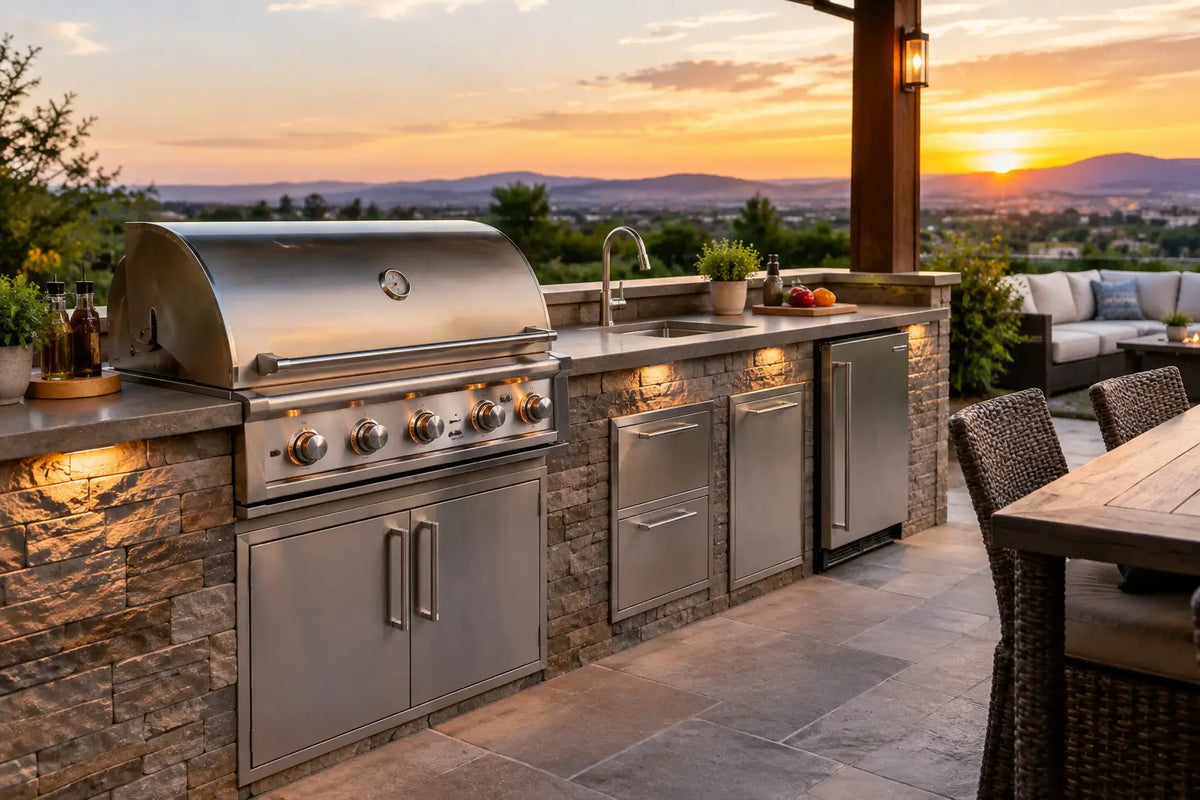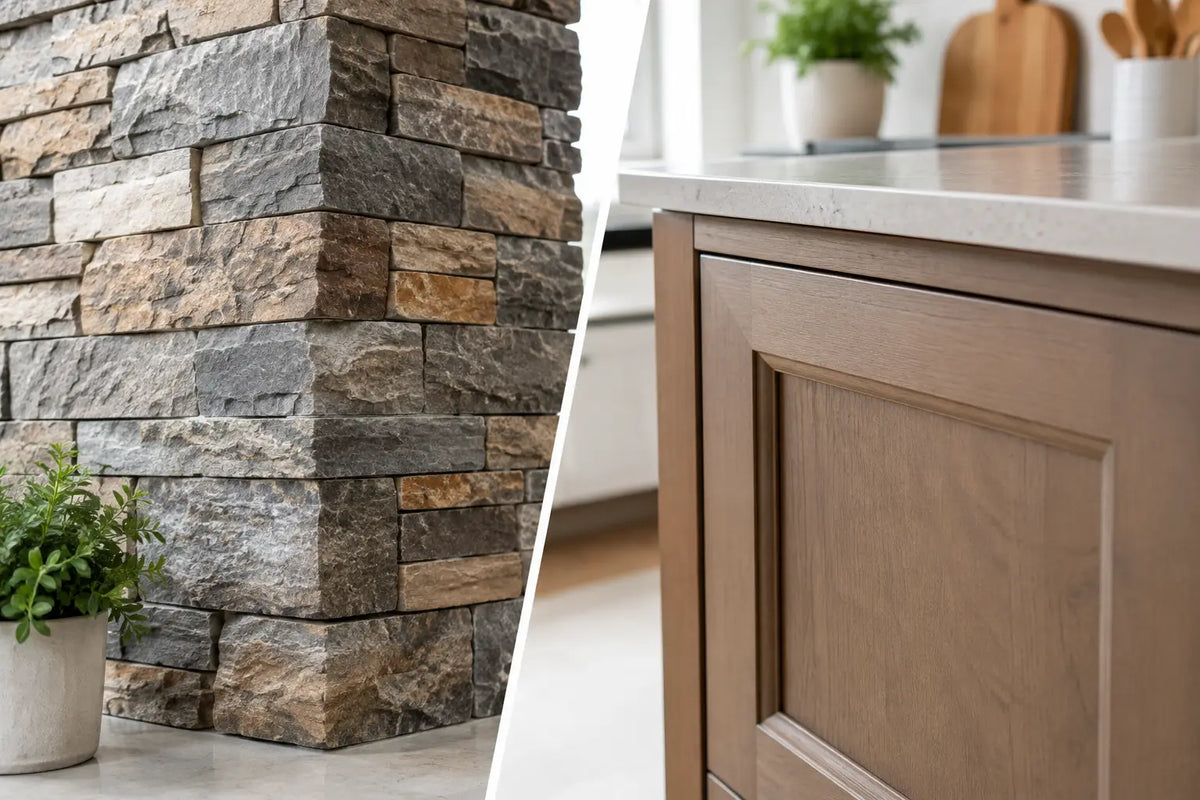
A stone-fronted outdoor kitchen can look permanent, architectural, and beautifully at home beside a terrace or pool. But in the decision between stone veneer versus cabinet frames, one distinction determines whether that beauty remains effortless: stone veneer is a finish, while cabinet frames are the structure carrying the kitchen through years of weather, use, and entertaining.
For a luxury outdoor kitchen, the question is not whether stone is attractive. It is whether the construction behind it delivers the same level of performance as the surface. The best choice depends on your site, desired installation timeline, appliance plan, and expectations for long-term maintenance.
Stone Veneer Versus Cabinet Frames: The Core Difference
Stone veneer is a decorative facing. It may be natural stone, manufactured stone, porcelain, or another stone-look material applied to a substrate. In a traditional built-in outdoor kitchen, that substrate is often a block structure, masonry wall, or framed enclosure. The veneer supplies texture and visual weight, but it does not create the cabinet itself.
Cabinet frames are the engineered bodies of an outdoor kitchen. They define the dimensions of the storage, support countertops and appliances, house utility runs, and provide the mounting points for doors, drawers, ventilation, and accessories. Their material matters enormously. A well-designed aluminum or weather-resistant metal frame can deliver rigidity without the mass, moisture sensitivity, or construction time associated with site-built masonry.
This is why the comparison is not entirely either-or. A premium outdoor kitchen may use cabinet frames as its high-performance foundation and a stone-inspired finish to achieve a particular architectural expression. The smarter question is which element should do which job.
Why Structure Matters More Outdoors
Indoors, cabinets are protected from rain, standing water, UV exposure, temperature swings, and freeze-thaw cycles. Outdoors, every component must earn its place. An enclosure that appears solid on installation day can become problematic if water reaches the wrong substrate, if the ground settles, or if heat from a grill is not managed correctly.
A site-built stone veneer kitchen often relies on multiple trades: masonry, framing, countertop fabrication, appliance installation, electrical work, plumbing, and finishing. That route can produce a striking result when every detail is specified and executed properly. It also introduces more variables, more scheduling dependencies, and more opportunities for inconsistency.
Purpose-built cabinet frames simplify the equation. Factory-engineered modules arrive with their structural geometry already controlled. Drawers align, door reveals are intentional, appliance cutouts are planned, and the modules can be leveled and connected on site. For homeowners and hospitality projects, that translates into a cleaner installation with far less disruption to an established landscape.
The hidden load behind a stone finish
Stone veneer adds weight, and that weight must be supported correctly. Countertops, grills, refrigeration, and storage add more. A masonry approach can accommodate substantial loads, but it requires a suitable foundation and careful planning from the start. Retrofitting a heavy stone-clad kitchen onto a rooftop, raised deck, or existing patio may be impractical or require structural engineering.
Modular cabinet frames are typically a more adaptable answer where loading, access, or installation speed matters. They are especially compelling for rooftop terraces, hospitality courtyards, vacation properties, and completed landscapes where demolition is not part of the vision.
Weather Resistance Is About the Entire Assembly
Stone itself is often celebrated as a durable outdoor material, and rightly so. Yet the surface is only one layer of the assembly. Mortar joints, grout, backing boards, sealants, penetrations around utilities, and the internal framework all need to withstand moisture and movement.
In freezing climates, water entering cracks or porous materials can expand and cause damage. In hot, sunny climates, UV exposure and thermal movement place different demands on finishes and seals. Coastal environments add salt air to the list. No material choice should be made based on appearance alone.
Cabinet frames designed specifically for outdoor use are built around this reality. Corrosion-resistant metal construction, ventilated appliance zones, durable powder-coated surfaces, and non-absorbent cabinet materials reduce the number of vulnerable layers. They do not eliminate the need for good site drainage and correct installation, but they make the kitchen easier to live with.
A stone veneer installation can be an excellent fit under a covered pavilion or as part of a fully integrated masonry landscape design. For an exposed terrace, a modular system with weather-engineered frames often offers greater predictability and less maintenance anxiety.
Design Freedom: Monolithic or Precisely Composed
Stone veneer creates a monolithic look. It can make an outdoor kitchen feel like a permanent extension of the house, particularly when its material and color closely reference surrounding walls, pool coping, or retaining walls. For certain Mediterranean, rustic, or natural-luxury settings, that continuity is powerful.
The trade-off is flexibility. Once a veneered masonry island is built, changing its footprint, replacing appliance sizes, adding a refrigerator, or relocating the kitchen is a construction project. Even access for repairs can be more involved if services are concealed within the structure.
Cabinet frames create a different kind of luxury: architectural precision with the option to evolve. Modules can be configured in linear, L-shaped, or island layouts. Storage, refrigeration, sink units, and grill housings can be selected around the way you actually entertain. If your property changes, your cooking preferences expand, or a hospitality space needs a new layout, modularity preserves options that masonry does not.
This is not a lesser design language. Premium framed systems use refined finishes, clean reveals, substantial countertops, and carefully integrated appliances to deliver a more contemporary architectural statement. The result feels composed rather than constructed in place.
Installation Time Is a Real Cost
The appeal of a custom stone-clad kitchen is understandable, but the process is frequently underestimated. A conventional project can involve base preparation, framing or blockwork, utility rough-ins, veneer application, countertop templating, countertop installation, appliance fitting, and final adjustments. Weather delays can affect several of these stages.
That timeline may be acceptable for a full new-build project where the outdoor kitchen is being designed alongside the architecture. It is far less appealing when the goal is to enjoy the space this season, not after a long chain of contractor appointments.
Pre-assembled cabinet modules change the experience. With a prepared, level surface and planned utilities, installation can move from a construction sequence to a coordinated placement and connection process. ELEEXA systems are designed around this principle: luxury outdoor kitchens that arrive as finished modules, ready to integrate with leading grill ecosystems without the usual assembly burden.
For developers and hospitality buyers, speed also protects budgets. Fewer trades on site means less coordination, less risk of finish variation, and a clearer path to opening a terrace, rental property, or resort amenity on schedule.
Appliance Integration Should Drive the Decision
The grill is the centerpiece, but it is not the only appliance that affects construction. Gas lines, electrical supply, drainage, ventilation clearances, access panels, and serviceability should be decided before the enclosure is selected.
A custom masonry build can accommodate virtually any appliance package when designed correctly. However, every appliance specification must be translated into the build, and late changes can be expensive. Cabinet-frame systems are especially attractive when they are engineered for defined grill, refrigerator, sink, and storage configurations. Compatibility is planned rather than improvised.
Pay close attention to heat management. Built-in grills require the correct liner, clearance, and ventilation provisions specified by the appliance manufacturer. Stone veneer near a grill may look substantial, but appearance never replaces an engineered grill enclosure.
Choosing the Right Approach for Your Property
Choose stone veneer over a traditional structure when the outdoor kitchen is part of a broader masonry project, the location has a properly engineered foundation, and a permanent, monolithic look is the priority. It can be the right answer for a custom estate where construction is already underway and a specialist team is managing every layer.
Choose cabinet frames when you want a premium result with faster delivery, controlled quality, cleaner installation, adaptable configuration, and dependable outdoor performance. This route is particularly strong for existing patios, roof decks, resort spaces, and design-led homes where the kitchen must look exceptional without turning the property into a prolonged jobsite.
The most sophisticated projects often borrow from both worlds. Use the cabinet frame for precision, weather resistance, storage, and appliance integration. Then complement it with a stone countertop, stone pavers, or a nearby stone feature wall to create material continuity without making stone veneer carry structural responsibility.
Your outdoor kitchen should feel permanent in quality, not permanent in inconvenience. Start with the structure that makes ownership easy, then select finishes that make the space unmistakably yours.