A grill parked beside the patio is no longer the center of outdoor entertaining. The most compelling outdoor cooking trends turn the entire terrace, pool deck, or backyard into a composed hospitality space: a place to prep, cook, serve, gather, and stay long after dinner is finished. For discerning homeowners, the shift is not about adding more appliances. It is about creating a more refined, capable environment around them.
The modern outdoor kitchen is expected to look considered from every angle, perform in changing weather, and remove the familiar frustrations of a traditional construction project. That expectation is reshaping what luxury outdoor living looks like.
Outdoor Cooking Trends Are Moving Beyond the Grill
The grill remains essential, but it is no longer expected to work alone. Today’s best outdoor kitchens create a complete cooking workflow, with defined space for preparation, cold storage, washing, plating, and waste. This change reflects how people actually entertain. Hosts do not want to disappear inside every time they need ice, a cutting board, or a place to set down a finished platter.
A well-planned modular kitchen makes that workflow feel effortless. The grill becomes part of a larger composition rather than a standalone object, framed by cabinetry and work surfaces that bring order to the outdoor room. The result is more relaxed entertaining and a more architectural visual statement.
This matters especially for properties where every detail is visible: rooftop terraces, waterfront homes, resort courtyards, and poolside lounge areas. In these settings, an outdoor kitchen must earn its place both functionally and aesthetically.
The Rise of the Outdoor Kitchen as Architecture
Luxury buyers increasingly treat outdoor kitchens as a permanent extension of the home’s architecture. Cabinet lines, counter finishes, colors, and appliance proportions are selected to complement the building rather than compete with it. A generic stainless steel island may still be practical, but it rarely delivers the tailored presence expected in a contemporary outdoor space.
The strongest designs use clean geometry and intentional material contrast. Dark cabinetry can anchor a bright stone terrace. Warm, natural finishes can soften modern concrete and glass. Integrated appliances preserve a calm, cohesive facade while keeping serious cooking power close at hand.
This trend favors systems that offer meaningful customization without forcing every project into a lengthy, contractor-dependent custom build. Modular does not need to mean standardized. When modules are thoughtfully engineered, homeowners and designers can compose a kitchen around the available footprint, preferred grill brand, storage needs, and visual direction.
For architects and developers, that flexibility has a second advantage: it brings greater predictability. Instead of coordinating multiple trades to fabricate an outdoor kitchen from scratch, a pre-assembled system can arrive designed as a finished product. That reduces site disruption and protects the integrity of the wider landscape or terrace installation.
Live-Fire Cooking Gets More Intentional
Gas grills remain the practical choice for fast weeknight cooking and high-volume hospitality service. Yet live-fire cooking continues to influence outdoor kitchen design, from charcoal grills and ceramic cookers to wood-fired ovens and dedicated fire features. The appeal is sensory as much as culinary: visible flame, smoke, ritual, and the unmistakable character of food cooked over embers.
The premium trend is not simply adding a second heat source. It is creating a setting where different methods can coexist without visual clutter. A high-performance gas grill may handle dinner for a crowd, while a ceramic cooker supports slow-smoked brisket or pizza nights. The right choice depends on how the space will be used.
For frequent entertainers, versatility often matters more than specialization. For a vacation property with a more relaxed pace, a live-fire centerpiece may be the right emotional choice. Either way, the kitchen should provide the adjacent counter space, durable storage, and heat-conscious layout that make these appliances enjoyable to use.
Weather Performance Is Now a Design Requirement
Outdoor kitchens are no longer purchased as seasonal furniture. They are expected to withstand sun, rain, humidity, temperature swings, and repeated use while maintaining their finish and alignment. This is one of the most important outdoor cooking trends because it separates a beautiful first impression from a lasting investment.
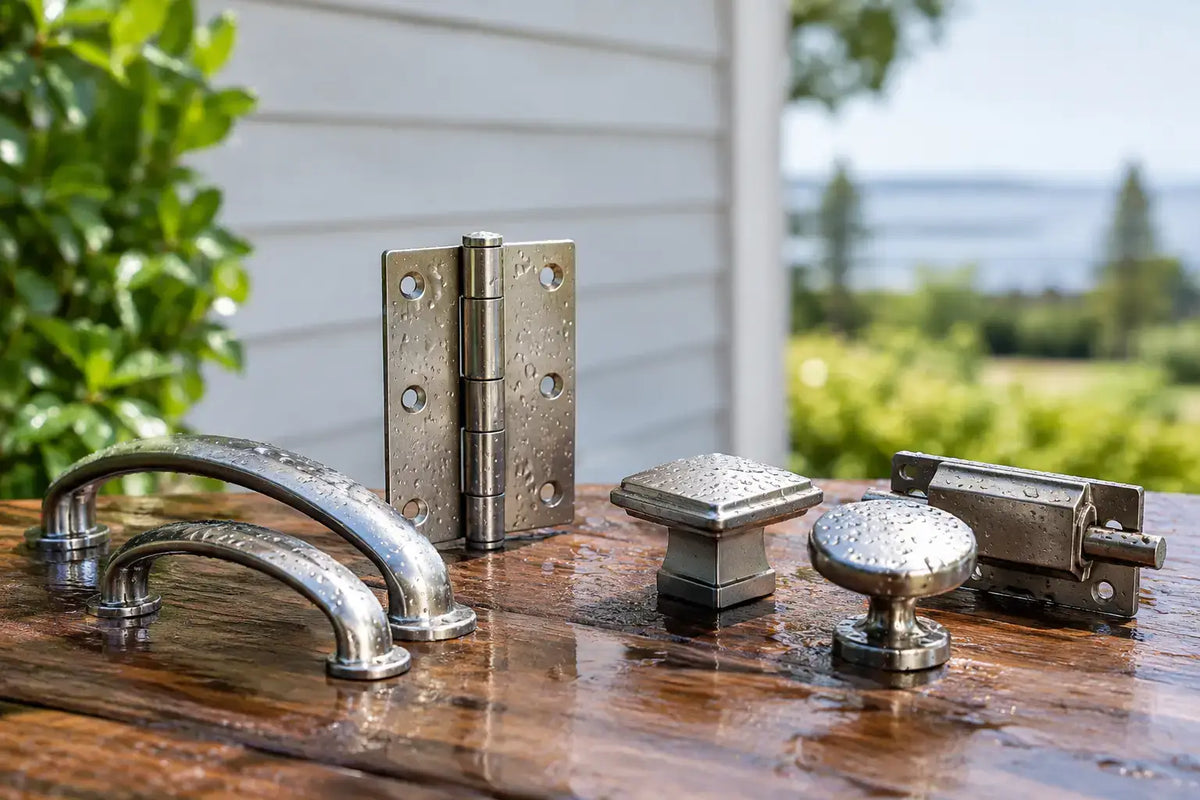
Buyers are asking sharper questions about materials: Will the cabinet construction resist moisture? Are hinges and hardware designed for exterior conditions? Will surfaces remain easy to clean after smoke, grease, chlorine, salt air, or pollen? How protected are appliance cutouts and service areas?
There is no single material that suits every climate. Coastal installations need strong corrosion resistance. Intense sun demands UV-stable finishes. Freeze-thaw regions require thoughtful drainage and countertop selection. The right outdoor kitchen should be specified for its actual environment, not merely chosen from a showroom image.
Premium engineering makes maintenance simpler, but it does not eliminate the need for care. Covers, routine cleaning, and proper seasonal checks still protect the investment. The difference is that a purpose-built outdoor system starts with materials and construction intended for the conditions it will face.
Plug-and-Play Installation Is Becoming the Luxury Standard
Time has become a luxury material. Homeowners may be willing to invest in a substantial outdoor kitchen, but few want months of dust, unclear contractor schedules, fragmented deliveries, and last-minute compromises. The market is moving toward faster, more controlled installation paths.
Pre-assembled outdoor kitchen modules answer that demand directly. They arrive as finished elements rather than a collection of parts requiring extensive assembly on site. With the necessary utility planning completed in advance, installation can be dramatically cleaner and more predictable than a conventional masonry or fully custom cabinet project.
That does not mean every site is simple. A rooftop may require access planning and structural review. A poolside kitchen may need careful utility routing. Hospitality projects often have more demanding code and service requirements. But a modular approach reduces avoidable complexity, allowing the project team to focus on the conditions that genuinely require expertise.
For buyers who value immediate enjoyment, this is a defining advantage. The goal is not to spend the summer managing construction. It is to host the first dinner with confidence.
Entertaining Zones Are Replacing One-Size-Fits-All Layouts
A luxury outdoor kitchen performs best when it supports the full rhythm of an event. Cooking should not isolate the host. Guests need somewhere to lean, sit, and talk without standing in the working zone. Food needs a natural route from grill to counter to table.
This is why linear kitchens remain popular for narrower patios and terraces, while L-shaped or island-centered arrangements suit larger yards and resort settings. The ideal layout depends on circulation, views, exposure, and guest count. More cabinetry is not always better if it narrows the terrace or interrupts a sightline.
The most successful spaces create three subtle zones: a practical cooking area, a social edge around seating or a bar, and a quieter dining or lounge setting nearby. Lighting carries the design into the evening, with task illumination at the grill and softer ambient layers around the seating area. When these elements work together, the kitchen feels less like an accessory and more like an outdoor room with a purpose.
Smart Features Should Stay Quiet
Technology is entering the category, but the luxury expression is discreet. Refrigeration, integrated lighting, temperature controls, charging points, and connected grills can make outdoor entertaining easier. The best technology supports the experience without turning the kitchen into a bank of glowing screens.
Consider what will genuinely be used. A built-in refrigerator can transform hosting by keeping ingredients and beverages close. Quality lighting extends the season and improves safety. A connected grill may appeal to enthusiasts who value precise temperature management. By contrast, features added only for novelty can complicate maintenance and date the design quickly.
At ELEEXA, this principle is reflected in outdoor kitchen systems designed to integrate leading grill ecosystems while preserving a composed, architectural finish. Performance is essential, but it should never come at the expense of the space’s visual calm.
Choose for the Life You Intend to Live Outside
The most enduring trend is also the simplest: outdoor kitchens are being chosen around lifestyle, not product checklists. A family that cooks outside twice a week needs something different from a host who stages large weekend gatherings. A city rooftop calls for a different answer than a sprawling vacation home. The right kitchen is the one that makes outdoor time feel easier, more beautiful, and more natural.
Start with the moments you want the space to hold: the quiet breakfast, the family dinner, the late-night conversation, the celebration that moves outdoors because no one wants it to end. Then choose a kitchen built to make those moments feel inevitable.