A pizza oven should command the terrace, not complicate it. The best outdoor pizza oven modules create a dedicated cooking destination that looks intentional from every angle, keeps the host in the conversation, and delivers the high heat that ordinary outdoor appliances cannot match. For a villa patio, rooftop entertaining area, or hospitality terrace, the right module turns pizza night into a complete outdoor dining experience.
The decision is not simply wood-fired versus gas. A premium pizza oven module must balance cooking style, architectural proportion, usable prep space, weather performance, and installation reality. Get those details right, and the oven becomes one of the most compelling features of the entire outdoor kitchen.
What Makes the Best Outdoor Pizza Oven Modules Different
A freestanding pizza oven can make excellent food, but it often leaves the rest of the experience unresolved. Where do ingredients wait? Where does the peel go between pizzas? Is there a safe, convenient surface for serving? Does the appliance visually belong with the grill, refrigeration, and cabinetry?
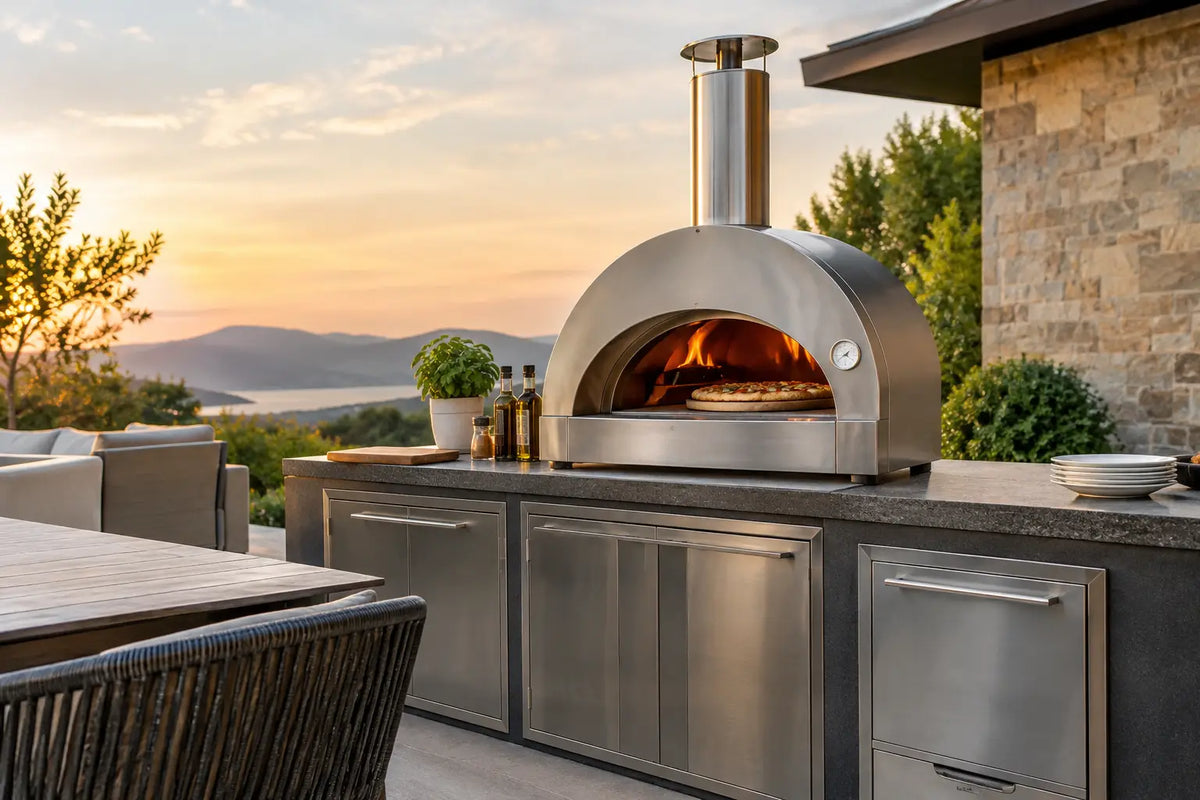
A purpose-built module answers those questions before the first fire is lit. It frames the oven with finished surfaces, integrated storage, and a proportioned cabinet base, giving a high-performance appliance the presence of a true outdoor kitchen centerpiece. This matters especially in premium settings, where a collection of standalone appliances can quickly look improvised.
The strongest modules are also designed around real use. Pizza making is fast, social, and slightly theatrical. Dough, sauces, toppings, peels, and finished pies all need a logical flow. A well-planned configuration gives the cook enough landing space beside the oven while allowing guests to gather nearby without crowding the work zone.
For buyers who value time as highly as craftsmanship, pre-assembled construction is equally important. A module that arrives built, finished, and ready to position removes much of the uncertainty associated with masonry work, multiple contractors, and drawn-out installations. The result is a more controlled route to a polished outdoor kitchen.
Start With the Cooking Experience You Want
The best choice depends on the kind of pizza host you intend to be. There is no single fuel type that wins for every property.
Gas-fired modules for fast, repeatable entertaining
Gas pizza ovens are the natural choice for homeowners who want speed and control. They preheat quickly, recover temperature efficiently between pizzas, and make spontaneous weeknight cooking realistic. For a busy family terrace or a premium rental property, that convenience can be decisive.
They also reduce the operational demands placed on guests or staff. There is no wood storage to manage, no ash to remove, and less smoke around close neighbors. The trade-off is atmosphere. While modern gas ovens produce exceptional results, some cooks prefer the ritual and visual drama of a live wood fire.
Wood-fired modules for character and theater
A wood-fired oven creates an experience guests remember. The flame, aroma, and high-heat cooking style bring a sense of occasion that suits long summer evenings, destination properties, and hospitality terraces. It can also deliver the distinct char and subtle smokiness many pizza enthusiasts seek.
That character requires more commitment. Wood needs dry storage, firing takes practice, and smoke management deserves careful consideration on compact lots or rooftops. A wood-fired module is best when the property has room for the ritual and the owner sees cooking as part of the entertainment.
Multi-fuel options for flexibility
For buyers who want a wood-fired weekend and an easy gas-fired Tuesday, a multi-fuel oven can be a compelling middle ground. It offers versatility, though the installation must still accommodate safe clearances, fuel access, and the manufacturer’s operating requirements. Flexibility is valuable only when the surrounding module supports it with smart storage and an uncluttered work surface.
Choose Materials That Belong Outdoors
An outdoor pizza oven produces intense heat, while the kitchen around it faces sun, rain, frost, grease, and frequent cleaning. Material selection cannot be an afterthought.
Look for cabinetry engineered for exterior exposure, with corrosion-resistant hardware, durable panels, and surfaces chosen for thermal stability and easy maintenance. Powder-coated metal, high-grade stainless steel, weather-rated composite panels, and premium outdoor worktops can all perform well when specified correctly. The best finish is not merely attractive in a showroom. It should retain its composure after several seasons of weather and entertaining.
Countertop material deserves particular attention. The area beside the oven receives flour, oil, acidic tomato sauce, hot cookware, and repeated wiping. A premium surface should be nonporous or properly protected, simple to clean, and suitable for the heat conditions around the chosen oven. Confirm required clearances rather than assuming every countertop can sit directly beside every appliance.
Color also matters more than many buyers expect. Dark cabinetry can create a striking architectural statement, while lighter finishes can make a compact patio feel more open. Match the module to the home’s exterior palette, but consider how direct sunlight, fingerprints, and poolside use will affect the finish over time.
Plan the Module Around Movement, Not Just Measurements
A pizza oven module may fit physically into a layout and still feel awkward in use. The difference lies in circulation.
Place the oven close enough to the prep zone that the cook can launch and retrieve pizzas without crossing the terrace. At the same time, avoid putting it directly in the main route between the house, dining table, and pool. High-heat cooking needs a clearly defined zone, particularly when children or guests are moving through the space.
A practical pizza station typically benefits from countertop room on at least one side of the oven. More space is better if multiple people will assemble pizzas at once. Nearby drawer storage can hold tools, gloves, thermometers, and cleaning equipment, while a lower cabinet can accommodate wood or fuel accessories where appropriate.
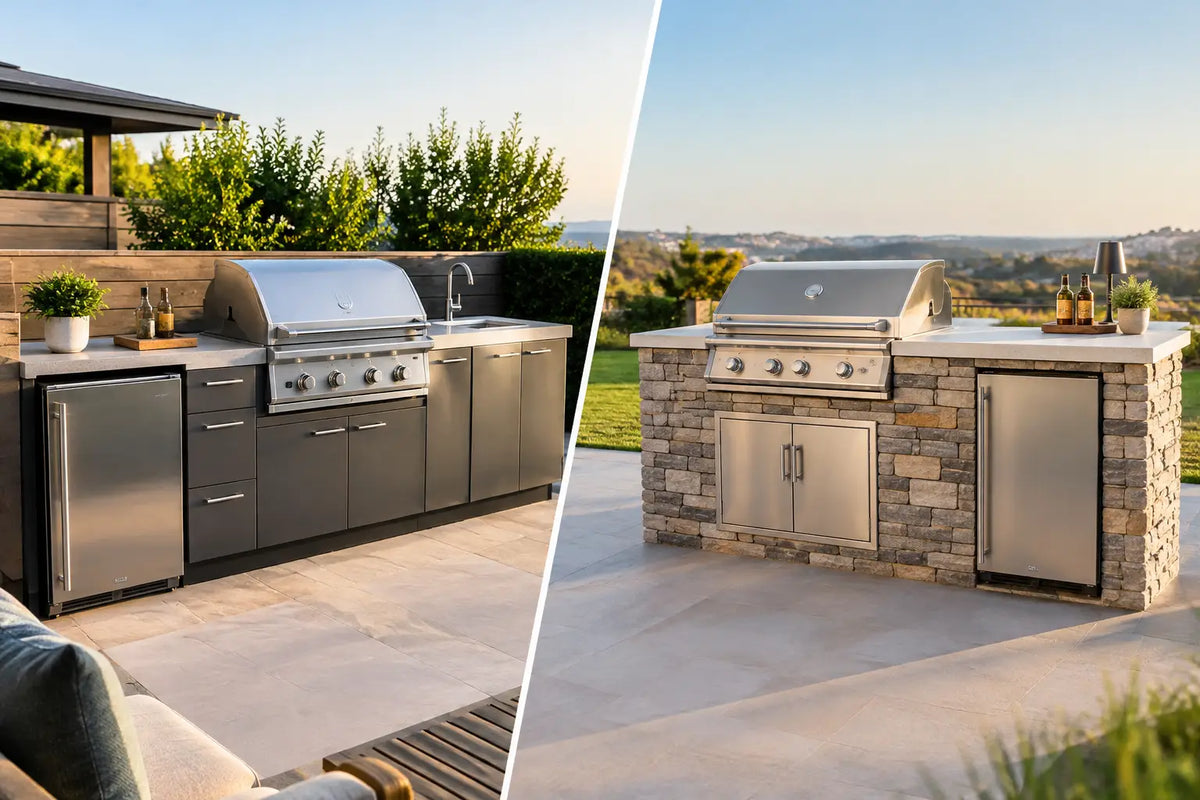
For larger kitchens, consider the oven as one point in a complete cooking line rather than an isolated feature. A grill module handles proteins and vegetables, refrigeration keeps toppings within reach, and a sink or utility area simplifies cleanup. The final composition should feel architectural, with consistent heights, finishes, and proportions across every component.
Installation Should Be Precise, Not Disruptive
Traditional built-in pizza oven projects can involve masonry, ventilation planning, utility work, and several trades. That route may suit a fully custom architectural project, but it often introduces longer timelines and more variables.
Modular systems offer a more refined alternative when speed and certainty matter. With pre-assembled cabinetry, the work shifts from building a kitchen piece by piece to preparing a sound, level location and connecting the selected appliance according to its requirements. ELEEXA applies this plug-and-play approach to create polished outdoor kitchen environments without turning the backyard into a prolonged construction site.
Pre-assembly does not eliminate site planning. Before ordering, verify access from the street to the final location, including gates, steps, elevators, and tight corners. Confirm the patio can support the loaded module, that the surface is level, and that local rules permit the intended fuel type. Gas connections and electrical accessories should be handled by qualified local professionals.
Rooftops and hospitality locations require another level of review. Weight limits, fire codes, wind exposure, drainage, and guest circulation should be resolved early, ideally with input from the architect, property manager, or contractor. Premium design feels effortless because the technical details were handled with discipline.
Details That Separate a Good Module From a Great One
The most satisfying outdoor pizza stations are defined by details that are easy to overlook during a quick comparison. Soft-close drawers keep tools organized and protected. Adjustable feet help achieve a clean, level installation on imperfect surfaces. Ventilation provisions protect cabinetry around heat-producing appliances. Thoughtful cable and gas routing preserves the composed appearance of the kitchen.
Storage should be purposeful, not simply abundant. Deep drawers are useful for pizza peels and pans, while smaller compartments prevent thermometers, cutters, and gloves from disappearing into a large cabinet. If wood is part of the plan, use a storage solution that keeps logs dry and visually contained.
Lighting can be equally transformative. Task lighting near the prep surface extends cooking beyond sunset, while subtle ambient illumination lets the module retain its architectural presence after the oven cools. On a luxury patio, the kitchen should look considered at night as well as during the day.
A Better Standard for Outdoor Pizza
The best outdoor pizza oven module is not necessarily the largest oven or the most elaborate cabinet. It is the one that suits the way the property is used, withstands its environment, and brings every part of pizza making into one composed setting. Select the fuel and capacity that fit your entertaining style, insist on outdoor-grade materials, and give the oven the preparation space and installation planning it deserves.
When the first pizza comes out crisp, blistered, and ready to share, the value of a well-designed module becomes clear: it gives people a reason to stay outside a little longer.