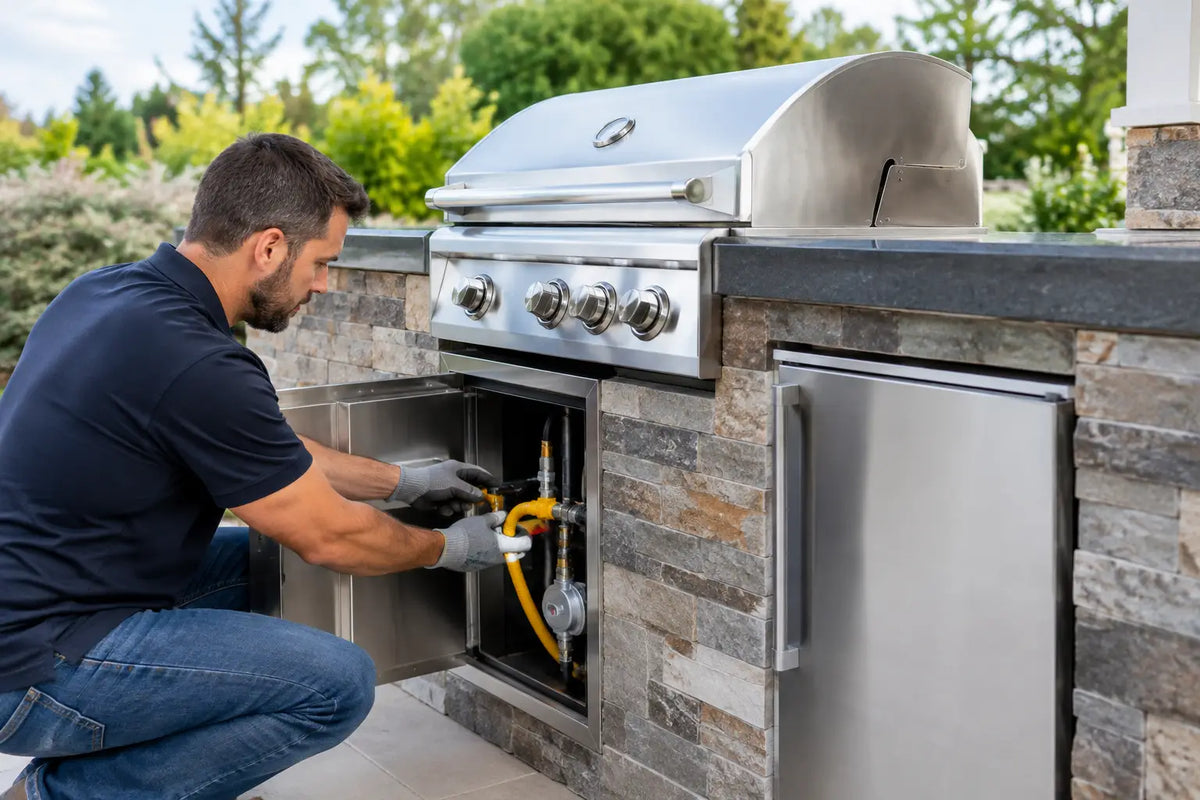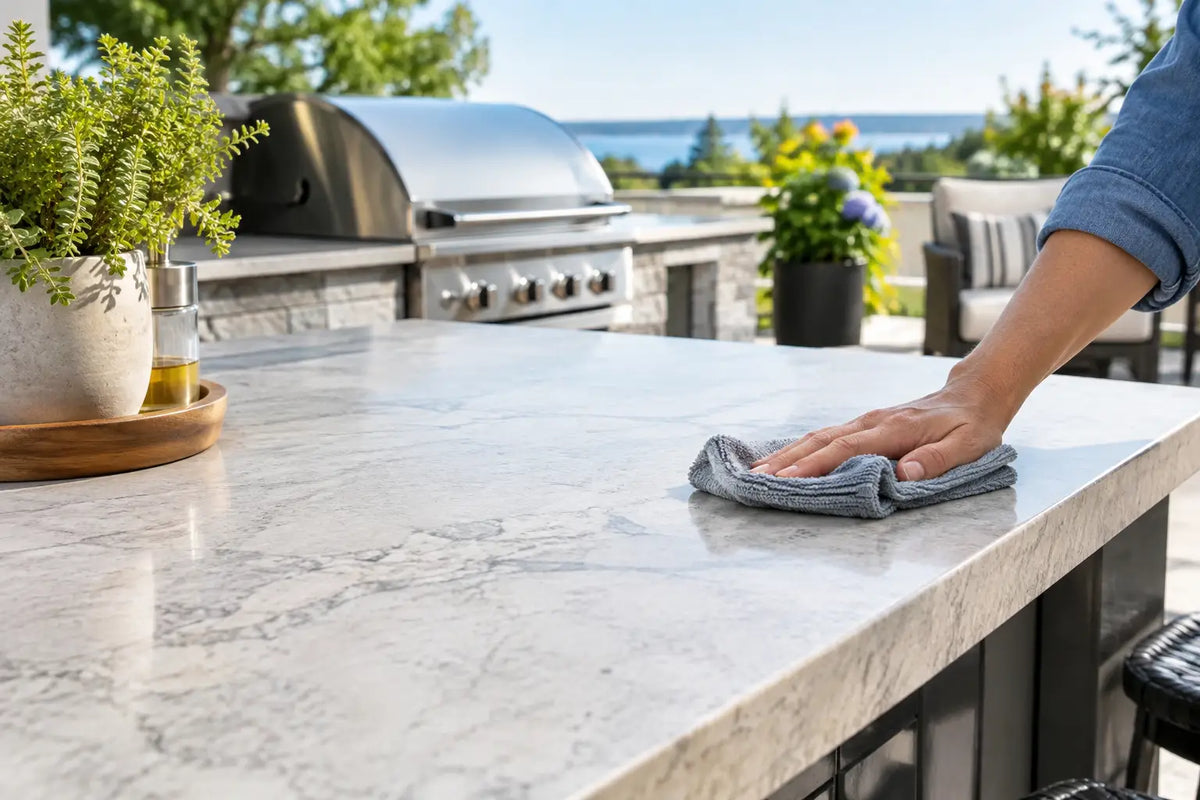
A beautiful outdoor kitchen can lose its tailored, architectural finish surprisingly quickly when its countertop is treated like an indoor surface. A bottle of wine left overnight, intense afternoon sun, pooled water after a storm, or a hot pan set down in a hurry can all leave a mark. Knowing how to protect outdoor countertops means preserving the surface that frames every meal, gathering, and view.
The right approach is not simply covering everything in plastic or applying a generic spray. It begins with the countertop material, the climate around your home, and the way you actually entertain. A properly specified outdoor surface should be built for exposure, but thoughtful care keeps it looking exceptional long after installation day.
Start with the countertop material
Outdoor countertops do not all require the same protection. The most effective routine is material-specific, because what protects natural stone can damage engineered surfaces, and what cleans stainless steel may leave streaks on porcelain.
Porcelain and sintered stone are among the most resilient choices for high-end outdoor kitchens. They are highly resistant to UV exposure, moisture, food stains, and everyday heat. Their low porosity also means they typically do not need sealing. Even so, they benefit from regular cleaning with a pH-neutral cleaner and a soft cloth. Avoid abrasive pads and harsh powders, which can dull a refined matte finish or leave faint surface scratches.
Natural stone, including granite and marble, offers unmistakable depth and character, but it asks for more attention. Granite is generally well suited to outdoor use when professionally sealed. Marble, limestone, and other calcareous stones are more sensitive to acidic ingredients such as lemon juice, wine, tomato sauce, and vinegar. These can etch the finish even when they do not create a traditional stain. If you choose natural stone for its distinctive beauty, accept that maintenance is part of the ownership experience.
Concrete provides a sculptural, contemporary look and can perform beautifully outdoors when it is correctly fabricated and sealed. Its key vulnerability is the sealer. Once that protective layer wears down, concrete can absorb moisture, oil, and color-rich spills. Stainless steel counters are exceptionally hygienic and highly practical near a grill, although they show fingerprints and can develop surface discoloration if salt, chlorine, or acidic residue is left in place.
How to protect outdoor countertops from sun and weather
Sunlight is often underestimated. Direct UV exposure can gradually fade certain finishes, dry out sealers, and make dark surfaces extremely hot to the touch. The solution is not necessarily to place your kitchen entirely in shade. Sun is part of the outdoor living experience. Instead, create intentional protection where exposure is most intense.
A pergola, retractable awning, or roof extension reduces daily UV load while making the kitchen more comfortable for guests. This is particularly valuable for south- and west-facing installations, where afternoon heat is strongest. For rooftop kitchens and open terraces, consider wind as seriously as sun. Wind drives rain sideways, carries abrasive dust across work surfaces, and can make lightweight covers more troublesome than useful.
When the kitchen is not in use for extended periods, use fitted, breathable covers for appliances and cabinetry rather than wrapping the countertop tightly. Covers that trap moisture against a surface can encourage mildew, water marks, and corrosion around metal components. A countertop is usually better protected by sound material selection, drainage, and occasional cleaning than by a non-breathable cover left in place for months.
Drainage deserves the same design attention as the countertop itself. Water should not collect at seams, against backsplashes, beneath accessories, or under a cutting board left on the surface. After heavy rain, a quick wipe-down prevents mineral deposits and helps you spot issues before they become permanent.
Seal porous surfaces before they need rescue
Sealing is essential for porous stone and concrete, but it is not a permanent shield. A quality penetrating sealer slows absorption, giving you time to wipe away spills before they migrate below the surface. It does not make the countertop invincible, and it will not prevent etching caused by acidic foods.
For most outdoor natural stone and concrete counters, a professional evaluation every one to three years is a sensible benchmark. Frequency depends on exposure, use, and the specific product installed. A kitchen at a coastal vacation home or beside a pool may need more frequent attention than one in a covered suburban patio.
A simple water test can indicate whether a porous surface may need resealing. Place a few drops of water on a clean, dry, inconspicuous area. If the water beads for several minutes, the protection is likely still performing. If it darkens the material quickly, schedule resealing. Always follow the countertop fabricator's instructions, since the wrong sealer can alter the appearance of the finish or create a hazy film.
Protect the surface during cooking and entertaining
The most polished outdoor kitchens are designed to be used, not preserved like showpieces. Still, a few disciplined habits prevent the majority of countertop damage.
Use trivets or heat-resistant pads beneath hot cookware, particularly near pizza ovens, side burners, and grills. Porcelain and granite can tolerate considerable heat, but sudden thermal shock remains a risk, especially with stone and concrete. Do not place a scorching cast-iron pan on a cool wet surface, and do not assume every countertop can handle direct contact with hot cookware simply because it is outdoors.
Wipe spills promptly, especially oil, red wine, coffee, berries, barbecue sauce, citrus, and grease. Keep a soft microfiber cloth within the kitchen module so cleaning takes seconds rather than becoming tomorrow's task. Avoid cutting directly on the countertop. Even durable porcelain can lose its pristine look from repeated knife contact, while natural stone and concrete can scratch or retain food residue.
For grill-side entertaining, designate a prep board and a serving zone. This small operational detail protects the finish while making the space feel more effortless and professionally organized.
Avoid cleaners that create bigger problems
Strong household products are often the source of avoidable damage. Bleach, oven cleaner, limescale remover, and highly acidic or alkaline formulas can degrade sealers, etch natural stone, discolor metal, or weaken grout and caulk lines. A product that feels powerful is not always appropriate for a premium exterior surface.
For routine care, use warm water, a mild pH-neutral cleaner, and a nonabrasive cloth or sponge. Dry the surface afterward to prevent spotting, especially in hard-water regions. For grease around the grill, use a countertop-safe degreaser approved for the specific material, then rinse and dry thoroughly.
Be equally careful with accessories. Rubber mats, plastic trays, and outdoor décor can trap water and leave uneven marks when left in one place season after season. Lift and clean beneath them regularly. If your kitchen is near a pool, remove chlorine splashes quickly. In coastal locations, rinse stainless steel components with fresh water more often to reduce salt accumulation.
Build protection into the kitchen design
The best maintenance plan starts before the first dinner is served. Countertop overhangs, sink placement, backsplash details, appliance clearances, and drainage all influence how easily a surface handles daily exposure. A counter beside a grill needs practical landing space for hot tools and platters. A counter under an uncovered tree may need more frequent cleaning because of sap, pollen, and bird droppings.
This is why pre-engineered outdoor kitchen systems offer a clear advantage over improvised builds. With a premium modular solution such as ELEEXA, weather-resistant materials, appliance integration, and functional work zones are considered as one cohesive composition. The result is not only more refined visually, but easier to protect because surfaces, seams, and modules are designed for outdoor performance from the outset.
A seasonal care rhythm that keeps counters impeccable
Outdoor countertops do not need constant attention. They need the right attention at the right time. A practical seasonal rhythm includes four checks:
- In spring, wash away winter residue, inspect sealant lines, and test porous surfaces for water absorption.
- In summer, wipe spills quickly, use heat protection, and remove sunscreen, pool chemicals, and grease before they sit.
- In fall, clear leaves, pollen, and organic debris from seams and corners, then clean beneath accessories and covers.
- In winter, remove standing water after storms and use breathable protection for appliances if the kitchen will be unused for long periods.
A luxury outdoor kitchen should gain memories, not blemishes. Choose materials that suit your setting, respect their individual care requirements, and make quick cleanup part of the rhythm of entertaining. That small level of intention keeps the countertop worthy of the architecture around it - and ready for the next gathering without compromise.