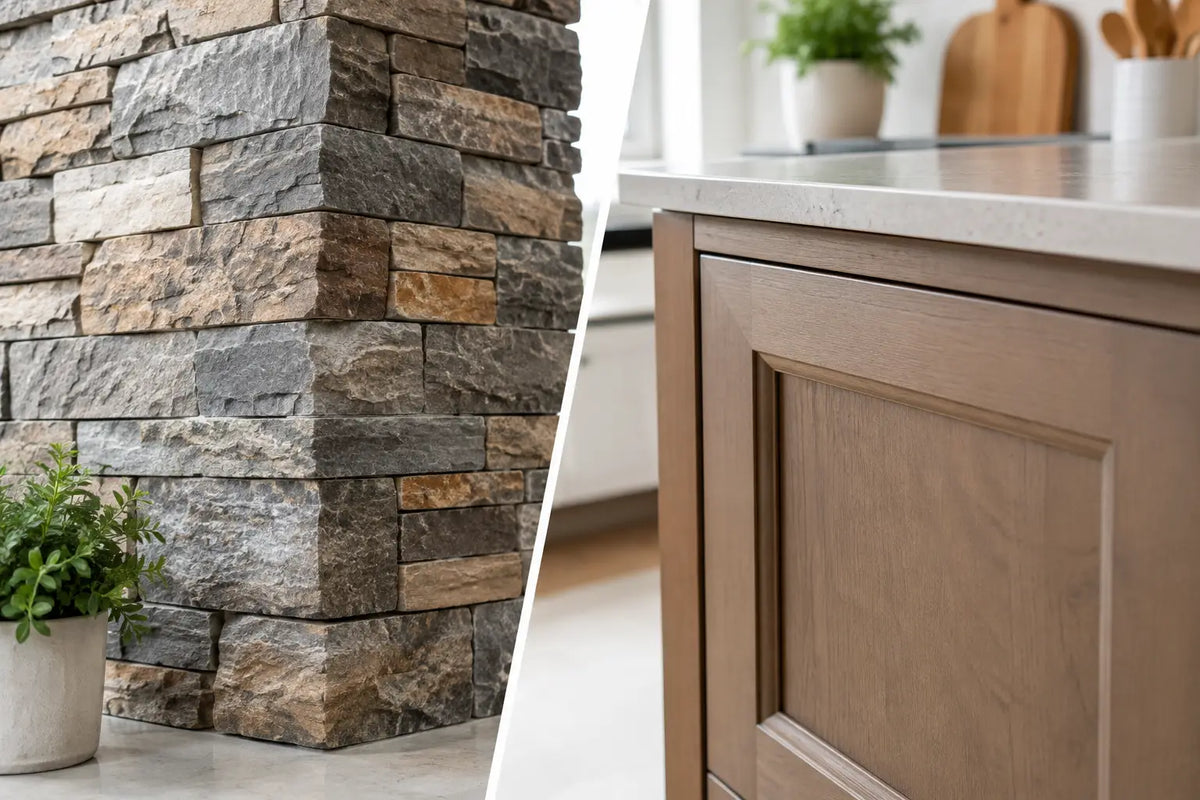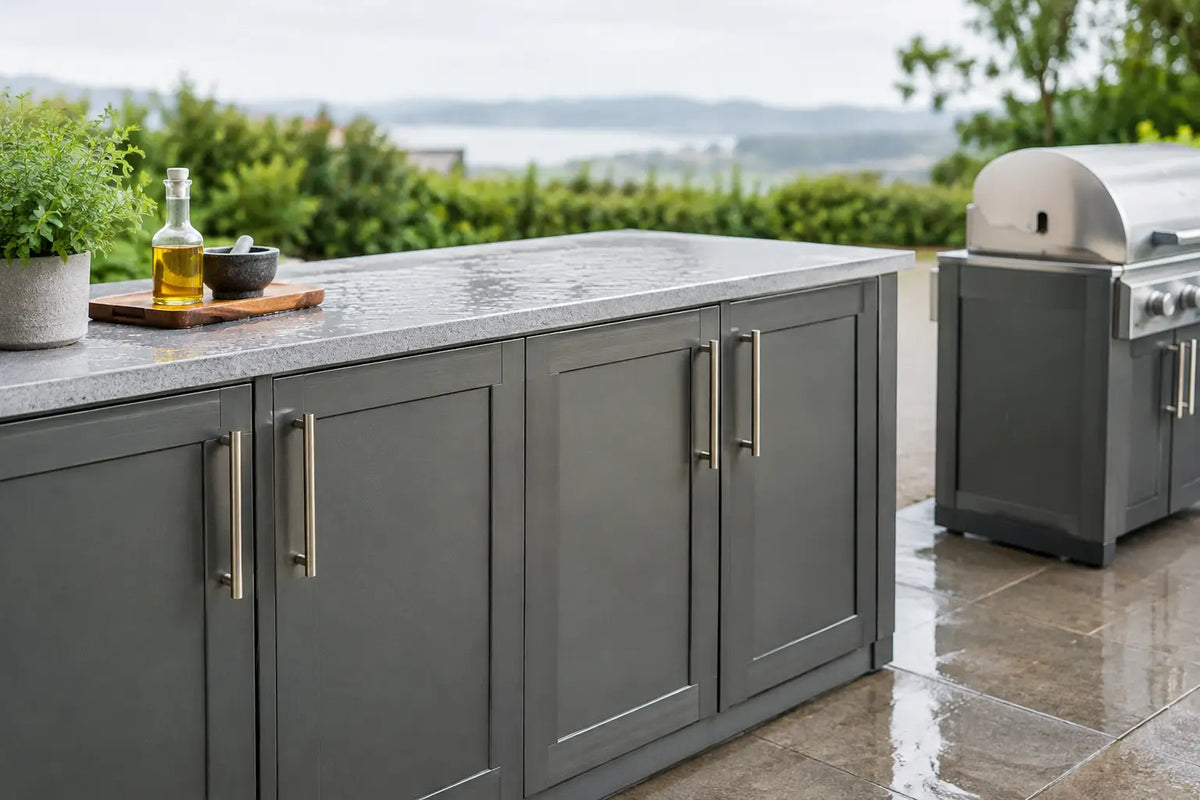
A passing shower should never send you rushing outside to empty drawers, cover appliances, or worry about swollen cabinet doors. Yet the question, are outdoor cabinets waterproof, deserves a more precise answer than a simple yes or no. Premium outdoor cabinetry should be engineered to withstand rain, humidity, UV exposure, and changing temperatures. That does not mean every cabinet becomes a watertight box in every condition.
The distinction matters when you are investing in an outdoor kitchen designed to anchor a terrace, pool deck, rooftop, or hospitality setting for years to come. The best systems manage water intelligently through material selection, protected construction, drainage, ventilation, and proper placement. They are built for outdoor life, not merely moved outside.
Are Outdoor Cabinets Waterproof or Weather-Resistant?
Most high-quality outdoor cabinets are better described as weather-resistant than completely waterproof. A waterproof enclosure prevents water from entering under defined conditions. Outdoor kitchen cabinets, by contrast, need to perform in a far more variable environment: wind-driven rain, standing water, intense sun, freeze-thaw cycles, sprinkler overspray, coastal air, and humidity can all test a kitchen differently.
A cabinet can resist rain extremely well while still having intentional openings for drainage, utility lines, airflow, or appliance ventilation. Those openings are not a flaw. They are part of sound outdoor engineering. Trying to seal every gap can trap condensation and moisture inside the structure, which may create more problems than occasional rain.
For homeowners, the practical standard is straightforward: cabinet bodies, fronts, hardware, and work surfaces should tolerate normal exposure to the elements without rusting, warping, delaminating, or losing their finish. Stored items should be protected from routine rain when doors and drawers are properly closed, but delicate electronics, paper goods, and unsealed food should not be treated as if they are inside a climate-controlled interior kitchen.
The Materials That Determine Outdoor Performance
Not all outdoor cabinetry earns the same level of confidence. Many lower-cost units use materials that look convincing in a showroom but struggle after a season of sun and rain. The cabinet material is the foundation of weather performance.
Powder-Coated Metal
Powder-coated aluminum and galvanized or stainless steel structures are popular for a reason. They offer strength, clean architectural lines, and a surface designed to resist corrosion. Aluminum is especially valuable because it does not rust in the traditional sense, making it a smart choice for humid regions and poolside environments.
The quality of the coating is just as significant as the metal beneath it. A well-applied exterior-grade powder coat helps protect against UV fading, scratches, and moisture. If the finish is damaged, prompt touch-up and regular cleaning help preserve the cabinet’s long-term appearance.
Stainless Steel
Stainless steel brings a professional outdoor-kitchen aesthetic and excellent moisture resistance, particularly when the correct grade is used. It is not entirely maintenance-free. Salt air, chlorine, grease, and mineral deposits can discolor the surface or cause tea staining if left in place. For coastal homes and hospitality properties near the water, the grade of stainless steel and a disciplined cleaning routine matter greatly.
Polymer and Composite Components
High-performance polymers and composite panels can be excellent outdoor choices when they are UV-stabilized and designed for exterior use. They do not absorb water like conventional wood-based panels. However, quality varies considerably. Thin plastic panels may fade, flex, or become brittle under sustained heat, while premium engineered materials retain a refined finish and structural stability.
Materials to Avoid
Standard MDF, particleboard, untreated plywood, and indoor laminate cabinets have no place in a serious outdoor kitchen. Even when painted or wrapped, these materials can absorb moisture through edges, screw holes, or minor surface damage. Once swelling begins, cabinet alignment and finish quality quickly deteriorate.
Water Management Is More Than a Door Seal
A weather-ready cabinet is not defined by one gasket or coating. It is a coordinated system. Door and drawer fronts should close with accurate alignment, minimizing direct water entry. Overhangs, recessed faces, and carefully designed reveals can direct rain away from vulnerable joints.
Drainage is equally essential. Water should have a path to escape rather than pooling beneath cabinets or collecting inside a base. This is particularly important on patios that are nearly level, rooftop terraces, and areas exposed to heavy rainfall. A premium modular outdoor kitchen should be positioned on a stable, properly sloped surface that allows water to move away from the cabinetry.
Ventilation also protects the kitchen from within. Cabinets housing grills, refrigerators, gas components, or other appliances require airflow for both safety and moisture control. Vent openings must remain unobstructed. They may allow some wind-blown moisture into the cabinet zone, which is why internal components and cabinet construction need to be suitable for outdoor use.
Why Installation Changes the Answer
Even exceptional cabinetry can underperform when installed poorly. Water often enters an outdoor kitchen not through the cabinet front, but from below, behind, or around it.
Place modules on a firm, level foundation with planned drainage. Avoid setting cabinets directly where runoff from a roof, planter, or retaining wall spills against them. If the kitchen sits beneath a pergola, remember that a pergola offers shade, not full weather protection. Rain can still enter from the sides, and moisture can linger longer in shaded areas with limited airflow.
Utilities deserve equal attention. Plumbing penetrations, electrical connections, and gas lines should be completed by qualified professionals and installed in accordance with local codes. Where lines pass through cabinetry, clean, protected cutouts prevent unnecessary gaps and reduce the chance of water tracking into concealed areas.
For a luxury installation, consider how the kitchen meets surrounding surfaces. Countertops should be correctly supported, joints should be appropriate for exterior movement, and the base should not sit in standing water. These details are less visible than a sculptural countertop or a built-in grill, but they protect the investment behind the design.
Protecting What You Store Inside
Weather-resistant cabinets are ideal for grilling tools, cookware, serving pieces, outdoor-safe dinnerware, and durable accessories. They are not the right place for anything that is highly sensitive to humidity or temperature swings.
Keep items such as charcoal, wood pellets, specialty seasonings, paper napkins, and electronic grill accessories in sealed containers if they will remain outside. In climates with freezing temperatures, remove liquids and check water lines before winter. A freeze can damage plumbing components even when the cabinet itself remains perfectly intact.
Cushioned drawer liners and interior organizers can also help prevent metal tools from scratching cabinet interiors. Small care decisions preserve the polished feel that distinguishes an outdoor kitchen from a collection of exposed appliances.
How to Maintain Weather-Resistant Outdoor Cabinets
Maintenance should feel proportionate to the quality of the kitchen, not burdensome. Wipe down cabinet fronts regularly with mild soap, water, and a soft cloth. Avoid abrasive pads, harsh chlorine cleaners, and acidic products unless the manufacturer specifically approves them for the material.
After a storm, check for leaves or debris around cabinet bases, drainage paths, and ventilation openings. Clean spills promptly, especially grease, acidic foods, sunscreen, and pool chemicals. These substances can dull finishes over time if they remain on the surface.
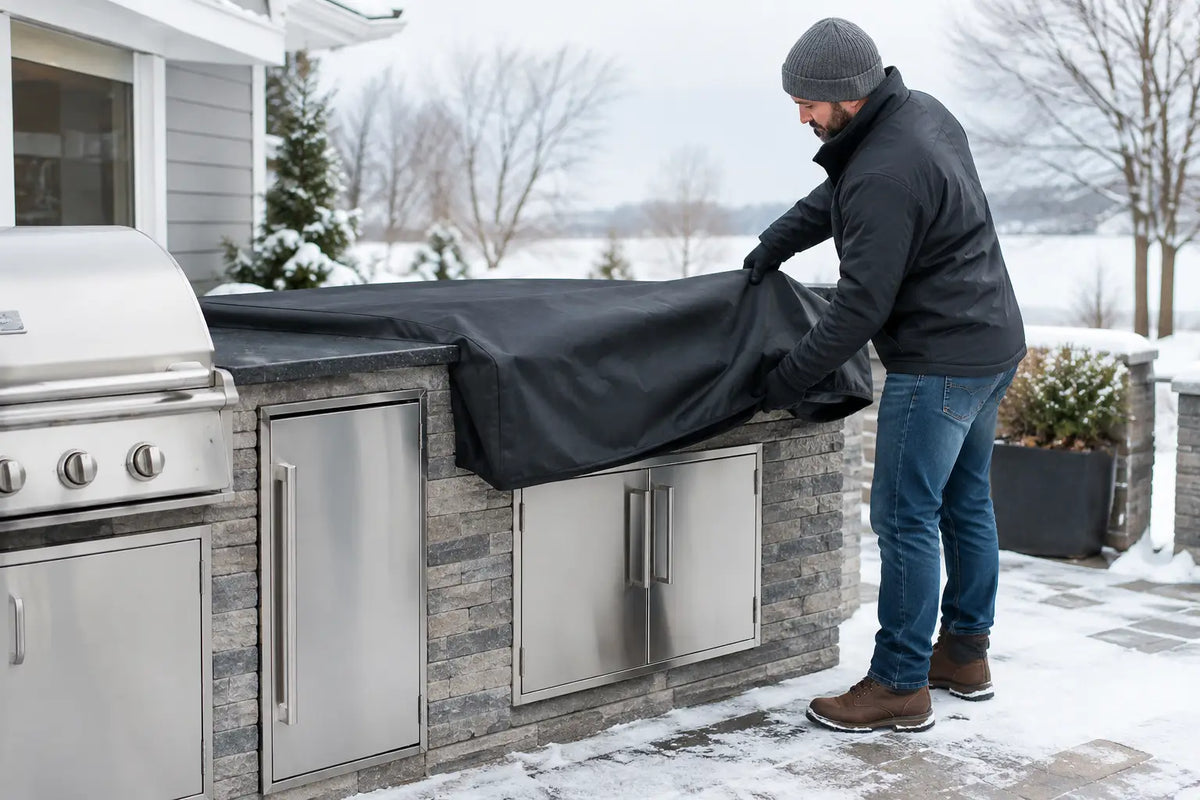
A fitted cover can be useful during extended periods without use, but it should fit well and allow airflow. A cover that traps moisture against cabinetry can contribute to condensation and surface staining. In snow-prone areas, clear accumulated snow rather than allowing prolonged weight and meltwater to sit against the kitchen.
Choosing Cabinets for Your Climate
The right outdoor cabinet specification depends on where it will live. A covered California patio faces different demands than a Florida pool deck, a mountain retreat, or a coastal rental property. High humidity calls for corrosion-conscious materials and ventilation. Strong sun requires UV-stable finishes. Freeze-thaw climates require careful attention to countertops, plumbing, and drainage. Coastal locations benefit from enhanced corrosion resistance and more frequent surface care.
This is where a purpose-built modular system has a clear advantage over an improvised assembly of indoor-style cabinets and exposed appliances. ELEEXA outdoor kitchen modules are designed to deliver architectural presence without asking owners to manage a lengthy, uncertain build process. The cabinet system, appliance integration, and material choices should work together from the start.
A beautiful outdoor kitchen should make entertaining feel effortless, even when the forecast is not perfect. Choose cabinetry engineered for the conditions around your home, install it with drainage and ventilation in mind, and enjoy the confidence of a space made to stay outside.